Agree- I have been largely disappointed by USB-C. It's been okay as a smaller USB-A replacement for flash drives and mice, but in general the lesson of USB-C is: just because it fits, doesn't mean it works.
My personal favorite annoyance is how chargers and cables are advertised with the wattage they support, but it's really the voltage and current that matters.
If you have a device that wants 20W as 9V/2.22A , your 30W charger may not support that specific combination and will charge much slower than a 20W charger that does.
Edit: Yes, I went to middle school and know that power is voltage times current. My point is: having an equal or higher wattage USB-C charger is not sufficient.
Its time to tell the somewhat unpopular story again. ( Because USB-C Supporters hate it )
Trying to help a lawyer out and trying to explain why the $5.00 USB-C cable he'd bought from Amazon wasn't delivering 4K video to his expensive monitor AND powering his laptop too.
Me: OK: so its a USB-C cable, but its not a high data rate USB-C cable.
Him: But, its a USB-C Cable.
Me: but, no, not all USB-C cables are high speed cables. And some of them can't do high speed and power delivery
Him: but... its a USB-C cable: it plugs into the port.
Me: Um... just because it plugs in, doesn't mean its going to work. You can have USB-C cables that are actually slower than the old USB ports.
Him: but.... shouldn't it just work?
And so on. For... 15? more minutes? maybe 30? I finally got him to buy a "proper" belkin USB-C cable . Which was bought from a company that should be anonymous, but lets just say that a "refurbished" cable was shipped, which, surprise, surprise ,didn't work, for ANYTHING.
This basically sums up everything that is wrong with Tech thinking vs User Thinking.
Don't we have this problem with regular electrical cables, but instead of not working you blow a circuit breaker or just start an electrical fire? There is very little stopping me from going to a wall socket and hooking up a 20 amp welder in a 15 amp plug and cranking it so the breaker trips or worse.
edit: I wrote this but then realized other countries other then the US exist and handle electricity differently, my example only applies to the US
I have a USB-C monitor, so I just plug my macbook in with a single cable and I get power and video. How people aren't loving this I don't know. I use a display port dongle for two additional screens to make a triple display and I still have 2 USB-C ports available. I plug my keyboard/mouse into the monitor.
If you're not loving USB-C, you're just not doing it right.
It took me buying three different usbc to hdmi cables to get my surface hub to play nicely with my two monitors. Nothing in this stack was less than 6 months old.
That’s why I don’t love it. Love the promise, hate the result.
Have you noticed any increase in battery degradation from keeping it plugged in all the time? I like the idea of that setup, but that's one worry I've had.
> This basically sums up everything that is wrong with Tech thinking vs User Thinking.
This is a pretend dichotomy. It's not "people who think about tech vs people who think about people." It's "some parts are cheaper than others because they don't do as much."
If you need to send 100 cars down a strip of road every 10 seconds, you can't use any road. You'd need one with lots of lanes
But that said, I'm not defending USB-C. It's true, I've had to do more research on cables than ever before in my life since it started becoming the new """standard"""
> This basically sums up everything that is wrong with Tech thinking vs User Thinking.
Are the cables actually accurately describing themselves? I'm more concerned that products are obsfucating what corners they cut rather than that a lawyer should "know" the nuances of the USB-C industrial complex.
My laptop has two USB C ports. You can charge it through one of them but not the other one. My other laptop has one USB C port. You can't charge it through that one. I have a USB cable for my old phone. You can only charge it slowly through that cable.
I've been pretty impressed with USB-C. I've managed to add a GPU to a NUC and train/infer with tensorflow, no problems. Plug a computer into a monitor and power and keyboard/mouse at the same time, while also using same cable to pass through charge two lightning devices...
I find it much harder to break a USB-C port then a micro USB port on all phones I've owned.
I've had headphones die because the connector came loose after around 500 insertion cycles.
Several companies in China make a "mag safe"-style connector for micro usb that is really nice. Some of them only provide power/ground. Others provide the full 4-wire spec.
I have a pair of Sony Headphones that annoyingly shut off the wireless when you charge them. So I didn't really care if it had the full four wire spec.
There's some out there for USB-C, but I wouldn't trust them for high-speed data transfer.
I grew up using Walkman; I have decades of experience with 3.5mm headphones jacks breaking. Interestingly, it seems like nearly all devices with 3.5mm jacks are engineered a lot tougher because I haven't been able to break a jack in years.
There's a dead comment under here which points out that 3.5mm is three connections around a large-ish cylinder, while USB-C is 24 connections in a tiny space.
It's easy to make tough, lasting connections when you have space for decent-sized leaves of sprung metal.
It's incredibly hard to make tough, lasting connections when each connection is on a 0.2mm pitch that is almost too small to see.
Bottom line - USB-C is an optimistically designed standard. It's almost impossible to make a super-affordable USB-C connector which will stay reliable for thousands of insertions. Especially when it's also used for up to 100W of power.
Plastics like Stanyl are supposed to be good for 10k cycles, but it's always tempting to cut corners and use something cheaper. And the physical design tends to collect dust and compact it inside the plug and the socket - which doesn't help.
> There's a dead comment under here which points out that 3.5mm is three connections around a large-ish cylinder, while USB-C is 24 connections in a tiny space.
That's not it really. It's the connector and solder strength.
The problem is that when you buy a piece of electronics with a micro-usb port, you don't know which connector type the product designer used, or if the solder joints are good, etc. Sometimes you won't know for maybe 100 or 200 insertion cycles, which usually places the device outside a manufacturer's warranty.
The solder joints on a right angled jack experience a torque on insertion. That torque puts strain on the solder joints. Do it enough times those solder joints will crack from the cycling.
Or worse the connector just rips the copper up off the fiberglass layer, since the strength of copper bond to fiberglass is much much less of the strength between solder and copper.
The only thing holding it to the circuit board itself are tabs which need to be soldered to copper pads on the board.
(My failed headphones were of this type.)
Though it seems like most USB C devices appear to be using through hole legs for mounting (I haven't seen a device use surface mount only yet). The solder flows through copper plated hole, bonds with the copper in the hole as well as the copper on the opposite side as well as the leg in the hole, increasing the strength of the part.
I have magnetic connectors for USB-C in both varieties. The circular one I normally use just has two pins and is great because I put my phone down near the cable and it usually leaps across and connects. The multipin flat connector supports PD and data, I'm not sure exactly what its limits are but it does what I want.
Both were cheap ebay purchases made because I'm willing to plug a $10 cable into a $600 phone despite the early USB-C cables occasionally frying devices.
I had (and lost, unforunately) a pair of Sennheiser MM400 headphones... The charging jack was on the removable battery pack and you could charge it while using it (no effect at all on headphone operation)
> All headphones and earphones I’ve tried will cut off everything else while they are being charged. Including Bose and Apple.
This has not been my experience with my AirPods Max. They work over Bluetooth just fine while being charged, unless they are completely depleted (0% battery).
For reference, this is on firmware version 4A400 but this has been the case since I received them (months ago).
alt-mode was the "killer feature" for me, alt-mode MST with a bus-powered splitter to drive dual DP (or HDMI) QHD external screens from a single USB-C port.
This makes a regular laptop a viable desktop replacement for me.
Support for multiple external displays makes the billing, though
these have 1x HDMI + 3x TB4 ports to play with.
Depends on the manufacturer. Lenovo x280 vs 2018 MBP. The Lenovo USB-C port is awful after 3 years of use, the port is loose and devices, including the woefully cheap charger, fall out. MBP, similar age (slightly older), and the ports still have a satisfying 'click' when plugged in. x280 cost more...
I don't know whether I over-use it, but the charger won't stay in of its own accord - same Lenovo brand charger works fine in the Mac. Pre lockdown, I commuted with both machines everyday. I've been disappointed with the build quality of the Lenovo laptop as a whole - the trackpad has the surface peeling off and the backlight is covered in bright spots which I can only assume happens because the back-panel doesn't have adequate protection.
What I personally hate is how cable type/speeds aren't usually advertised. I've got a dozen or so USB-C 2.0 cables that feel useless for anything but power, and only a couple 3.0 cables that continually get lost and need replacing. The connector itself is fantastic, USB-A and USB-B have needed replacing for a long time (especially since 3.0), but the implementation has been a disaster by any measurable margin.
> Agree- I have been largely disappointed by USB-C. It's been okay as a smaller USB-A replacement for flash drives and mice, but in general the lesson of USB-C is: just because it fits, doesn't mean it works.
I think USB-C works fine (h/t Benson Leung) but the implementation is problematic. Partly because of the complexity of everything they've tried to shove in, also partly because USB-A still exists and is the biggest competitor USB-C needs to overcome.
Give it 5 more years and we'll look at USB-A like serial ports. Till then, USB-A is legion.
Given that we're already 5+ years into Apple's USB-C revolution, I'm not so confident that this is going to happen. I'm going to keep using my USB-A peripherals for a long time, and more importantly, mice, yubikeys, keyboards, and a whole lot of other things are still largely sold with USB-A. Some of those have replaceable cables... but it's still a lot of effort to move away from that.
Furthermore, ditching all of those USB-A accessories and cables that still work fine just feels wasteful. If the only thing you're throwing them away for is compatibility, and not some feature that's actually improving them, even more of a waste. It's just churn to push more tech company profits.
This is a gradual transition. Most electronics last somewhere around 5-8 years, so we're looking at another 5 years before we can truly ditch USB-A.
The fundamental mistake Apple made was continuing to ship USB-A cables in the box with products, and expecting USB-C adopters to pay up for USB-C cables. This was good for Apple's short-term margins, but terrible for the transition.
So, I blame Apple for keeping USB-A alive. They introduced the all USB-C Macbook Pros in late 2016. You'd have expected that over the next year they'd have phased out USB-A, so by 2017 or 2018 they'd have not shipped any USB-A cables or adapters in the box.
But nope. Airpods 2 (released in 2019) still ship with a USB-A cable in the box. It's the same with the iPhone 11 (2019), and the Magic accessories for MacBooks until 2021.
> If the only thing you're throwing them away for is compatibility, and not some feature that's actually improving them, even more of a waste.
Interestingly, this is also a good argument for why the EU shouldn't force iPhones to use USB-C. People have tons of lightning cables that would become e-waste overnight, and all the demand for USB-C to USB-C charging cables would be profits of (some) company - Apple, Anker, or random Amazon companies.
> The fundamental mistake Apple made was continuing to ship USB-A cables in the box with products, and expecting USB-C adopters to pay up for USB-C cables
I remember hearing someone point out during that period that if you bought an iPhone and a MacBook, brand new, you couldn't plug the phone into the computer out of the box. Which seems like one of those things that would have been unacceptable to Jobs if he were still around.
USB-A also became so widespread that they became wall plugs in their own right, so at least those will stick around a lot longer unless people start hiring electricians to change their plugs.
USB-A is alright for charging small electronics. It's 5V and somewhere between 0.5A and 2.1A (1A is very common).
I have charging cables (with USB-A on the power side) in multiple places around the house, using the 5V/1A adapters that shipped with iPhones over the years. This works fine, though it is slower than the "fast charging" we've grown to expect these days.
The device end of these cables are miniUSB (bicycle lights), microUSB (external battery pack), USB-C (my partner's noise cancelling headphones), and many of them are Lightning (Airpods, Airpods Max, iPhones, iPads, Apple TV Remote).
I suspect USBA isn't going away, it's far more robust than USBC, what I suspect will happen is devices that need smaller sockets will use USBC and everything else will stick with USBA. There is a reason I have one USBC port on my motherboard and 5 USBA ports.
Guess I'm the opposite. I hate USB-A the connector with passion. I always have to try 2-3 times to be able to plug the USB-A connector in. Now I keep only 2 USB-A chargers in my home for legacy devices and advice my wife explitcitly not to buy new gadgets with USB-A connector, be it mini or micro.
Here's a slightly helpful tip. USB-A connectors have a USB logo on them. Look at or feel for that logo on the connector and always have it face up when you plug it in. It should always work.
There's a few exceptions. If the USB-A jack is rotated sideways on the device, then "up" could be left or right. And if it's a cheap off-brand sweat shop connector, then the logo may be on the opposite side. A sign that it could break quickly too.
At some point in the future, USB-A will be phased out. If only because new devices will need the better profiles USB-C provides or because enough devices will no longer support USB-A.
I'd say 3 more years will be the turning point. You must remember, before USB there was no universal port. So USB-A didn't have to replace it's predecessor.
I'm dissappointed in USB in general, we have standards but it seems few follow standards. For example, I recently bought my wife an Asus ROG Falchion keyboard. Really tiny one with Zhuyin input.
So the connection is USB-C, but if you connect ANY USB-C cable to the keyboard, it wont charge. Even the USB-C <> USB-C cable that comes with iPad Pro doesn't charge it. So far of the ~20 cables I own that I've tried, the only cable that will charge it is the Asus provided cable...
Same with my Momentum 3 headset. It charges over any USB-C cable "that can also carry data". If the cable is power-only (and surprizingly, many are power-only, including Apple's cables that come with iPad/MacBook) it won't charge even though I just need to charge my headset and (obviously) no data transfer.
It's stupid, but it is unfortunatelly the way it is.
I'm honestly really happy with USB-C. My phone, laptop and tablet charge the same way. I bring one charger and two cables, so I can pack much lighter than before. Each device can serve as a power bank for the others. My monitor serves as a powered hub, so there's only one cable connecting everything to my laptop. I use the same charger for everything from my camping lantern to my computer. I don't have a big box of cables anymore, nor do I pack 5 different cables when I'm on the move. It's very convenient.
It only becomes a problem when I leave my bubble. I usually travel without my adapters, so I can't borrow someone's mouse, or plug something into their TV.
Then there's the issue with cables and chargers. I have thick cables and 100W chargers, so it's never a bother, but it's not a trivial thing for the average user to make sense of.
>
If you have a device that wants 20W as 9V/2.22A , your 30W charger may not support that specific combination and will charge much slower than a 20W charger that does.
Such a charger would be not specifications compliant. Don't blame the specs for what the manufacturers did with it.
Oh and don't get me wrong: there are a lot of problems with USB C mostly with the complete impossibility of knowing what the heck a USB C port is actually capable of. Is it Thunderbolt capable? if not, DisplayPort alternate mode capable? Can you charge the device over it? If yes, what's the maximum wattage.
This will ease finally because Microsoft will require PCIe tunneling on all C ports for the device to be Windows 11 certified so there won't really be different USB 4 ports -- except for charging wattage... https://docs.microsoft.com/en-us/windows-hardware/test/hlk/t...
A charger does not have to support any particular voltage/current combination. If a device requests a specific config (9V/2A) but the charger only provides 12V/1.5A with 5V/1.5A fallback, then the best the two can negotiate is 5V at 1.5A. Even if the charger provides 9V/1.5A the device might be programmed to only accept 9V/2A with 5V fallback. This would be USB-compliant, but still frustrating to the user.
First of all, I have answered to "If you have a device that wants 20W as 9V/2.22A , your 30W charger may not support that specific combination" saying that's not specs compliant. https://i.imgur.com/rkIJuMr.png I highlighted the relevant part. These are the rules: https://i.imgur.com/b8q96tH.png So, to summarize: since a 30W charger must provide everything a lower wattage charger like a 20W charger does and 20W falls between 15 and 27 then yes it must support 9V 2.22A as well. If it doesn't then it's not compliant. Note the caption in the second image "an example of an adapter with a rating at 50W. The adapter is required to support 20V at 2.5A,
15V at 3A, 9V at 3A and 5V at 3A."
> If a device requests a specific config (9V/2A) but the charger only provides 12V/1.5A with 5V/1.5A fallback
Then it's not compliant. 15-27W is to be delivered via 9V. 12V is optional.
You're almost correct here - if a device advertises a particular power rating, they need to provide the configurations you linked. But they are allowed to provide any arbitrary configuration beyond their marketable power rating. So consider a charger that has a smallish inductor in its DC/DC supply, and a DC/DC chip with an integrated MOSFET limited to say 2.5A switching current. For thermal reasons, that charger can't safely provide more than say 1.7A regardless of voltage. Because it can't supply more than 1.7A at 9V it can't be listed as having a PDP of more than 15W. However, that charger is allowed to provide that same 1.7A at 20V if it wants to, and advertise that configuration to the device - as long as it doesn't list that as its rated power. This sort of charger would be functionally providing >30W, but would only be allowed to put 15W on its packaging/advertising materials. From a user perspective, they see a charger happily providing 30W to one device, plug in another device, and get a lower output power. The lower power is exactly what it says on the packaging (which the user threw out ages ago and never looked at) but the user is still frustrated.
Looks like I was wrong on this - at least in the latest version of the PD2 standard it's not allowed to advertise any combination that exceeds the PDP. It's only in PD3 that devices are allowed to limit power in particular configurations due to thermal constraints even if they can technically deliver the same power in another configuration, but even that is limited only to >100W configs. So you're right about this - my example is definitely incorrect.
GP's point is that although chargers are labeled with wattage, they can't output any combination of volts and currents as long as they multiply to the stated wattage. Can you take a normal 100W charger and ask it to output 100V and 1A? It can't.
The Apple 29W charger supports two configurations only: 14.5V × 2A, or 5.2V × 2.4A
The Apple 30W charger supports these four instead: 20V × 1.5A, 15V × 2A, 9V × 3A, 5V × 3A
> chargers and cables are advertised with the wattage they support, but it's really the voltage and current that matters.
Wattage is what you get when you multiply amps and volts. You just said the equivalent of "It's not about the ice cream, but about the ice and the cream".
Also, it arguably does have everything to do with volts - if you put the too much voltage into a device, most likely you're going to damage the device, its surroundings, or yourself (i.e. in a house fire).
USB-PD on USB-C negotiates the highest voltage your device and charger will support.
You can buy a 30W USB-PD charger that supports a smaller subset of voltages than a 20W USB-PD one, and in practice will deliver less power to your device because the voltages both like don't line up well.
What actually is supported by each tends not to be specified/disclosed-- or if it is, it takes a lot of digging to figure it out.
Yes and power negotiation does not protect against improper voltage whatsoever. This wasn't my point, despite me addressing negotiation in another comment.
If I put 120 volts through to my MacBook directly over the cable it will invariably damage it. Voltage negotiation doesn't matter here.
Also the original comment was unclear; they've edited to clarify. But of course, I'm the bad guy on HN for not being able to read minds.
E: I realize my GP comment was also unclear. I should have said "excessive" voltage, not improper I suppose. "Improper" in my head meant outside the rated voltage for either end/the cable. I'm not the one being a pedant here.
Out of curuosity: is there any instance where it isn't implemented correctly that actually damaged/fried some electronics? What I've seen is that in the worst case it doesn't charge or negotiates at a very low voltage and charges slowly.
Your own analogy can be used to explain how you do not fully understand the situation. 10 cups of cream and 1 cup of ice does not make ice cream, even though that technically is ice and cream. Just like a 10V 5a charger is not the same as a 50V 1a charger.
The important part with regards to power delivery isn't simply wattage. If a hypothetical charger can put out 96W at 1V@96A, it's never going to deliver even close to that amount of power to a device that expects 96W at 20.5V@4.7A.
Exactly. I was not just trying to be a jerk. Their analogy was actually a good one, they just used it incorrectly. Ice cream is only ice cream in a certain range of ice to cream ratios, just like a charge needs a "close enough" mix of voltage and amps for it to reach useful wattage (depending on the device).
They're not interchangeable. USB-C has power negotiation, but that doesn't mean the devices support those voltages. You still need to understand the voltage ratings on both ends of a cable.
That's exactly what OP is saying - chargers are commonly advertised as being able to supply a particular wattage, but that particular wattage is only attainable if the device being charged supports the maximum voltage the charger is capable of delivering.
OP is complaining that that leaves the true wattage of a given device/charger pair unknowable from the charger's packaging alone without further information as to what voltages and at what currents it can supply on request from the device. It's certainly a valid frustration.
The reverse situation would be the case (cable supports 3A, but not 6A). For the range of voltages supported by USB-PD, the cable only cares about amperage. Copper wire doesn’t care much if it’s 5V, 50V, or 250V, it’ll carry it the same. However, if the size of the wire isn’t correct for the amperage, it’ll over heat and potentially catch fire.
It’s the end device that cares about voltage and amperage both as the voltage steppers inside have to be ready to handle providing the right voltage to the chips and the amperage has to be right to handle the load.


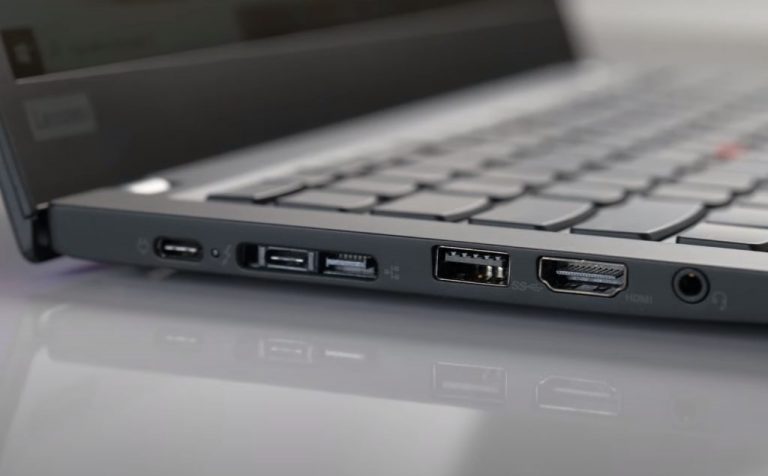


My personal favorite annoyance is how chargers and cables are advertised with the wattage they support, but it's really the voltage and current that matters.
If you have a device that wants 20W as 9V/2.22A , your 30W charger may not support that specific combination and will charge much slower than a 20W charger that does.
Edit: Yes, I went to middle school and know that power is voltage times current. My point is: having an equal or higher wattage USB-C charger is not sufficient.