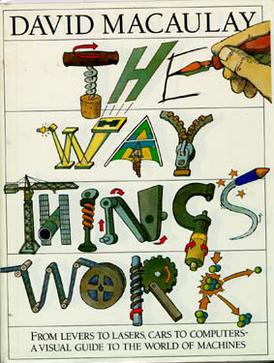
Growing up I got the impression that a fallout shelter was a purpose-specific room deep underground. So every time I saw the "Fallout Shelter" sign on a building, I figured it was built with one of these "secret underground rooms". Think dedicated, locked stairwell that goes a thousand feet underground; after all, that's how it was pictured in my "Way Things Work" book. When we went to the bank, it was something of an intrigue, where the door to this secret underground cavern really was and what was inside.
As I got to go into more city buildings throughout my life, I noticed many of the rooms designated "fallout shelters" were just some spare room in the basement, complete with ventilation to the outside and really, not much farther than a few steps to the front door.
There may be a lot of "fallout shelters" in NYC but I get the impression that the labeling wasn't very strict and that many of these "shelters" won't really protect you from "fallout".
It takes far less to be an effective fallout shelter than you might think. If you look at lethal ranges on H-Bombs you see incredible destruction, but if you're protected for the first 1hour after a blast you can be surprisingly close to the blast and live.
I’m less concerned about the blast than what it would take to keep me alive and reasonably healthy after. I’d like my fallout shelter to include some food and water.
Some used to: I distinctly remember boxes and boxes of crackers in some underground shelter as a child.
One way of looking at these shelters is what % of radiation can you avoid for a blast X miles away. 90% and 99% are both easy to reach and would save vast numbers of lives as many decay products have half lives under a minute making them temporary, but significant problems. 99.99% gets really expensive because of longer half lives and the need to better filter air etc.
PS: Further, there is a tradeoff as unless it protects you from x% of radiation protection from the blast is basically pointless.
Fallout shelters only need to be used for 12-48 hours. People can survive without food or water for that long. Definitely better to have supplies, but proper shelter is more important for fallout.
Fallout shelters aren't about protecting from the nuclear blast but from the fallout that comes afterwards. The secret to surviving fallout is to put as much distance and stuff as possible to places where fallout collects like the ground. And then stay there for 24-48 hours. Looking for buildings with basements, or the center of multi-story buildings.
The advice I have heard is if not in proper shelter, like house without basement, to shelter in place to survive blast, and then move within the first 15 minutes to better fallout shelter.
I mean blast in terms of timing. You can get a leathal radiation doses in the first seconds well outside the fireball.
Moving from shelter A to B is very high risk. It might work, but you are unlikely to get far and would want someway to avoid breathing dust on the trip. If your in the center of a large office building for example you probably want to stay there for the next hour unless a great shelter is less than five minutes away or the building is on fire etc. http://www.businessinsider.com/nuclear-explosion-fallout-rad...
Off-topic, but if the book you’re referring to was the How It Works encyclopedia set, that was how I also learned about everything. My grandpa gave the set to me, and it included an incredible amount of material - illustrated and fascinating for a wide range of ages (this was long before we had internet). It is how I also learned about nuclear weapons, though I don’t specifically recall fallout shelters.
> A future nuclear war would not only reduce cities and towns to ruins. Fallout from the nuclear explosions would spread through the atmosphere, bombarding the land with lethal amounts of radiation. The only means of escape would be to live in deep underground shelters away from the fallout. This imprisonment would have to last until the radiation decreased to an acceptable level, which could take many years. Even then, climatic changes, shortage of food and the threat of disease would make life above ground a grim business.
Incidentally, the book is most memorable for lucid and well-explained diagrams involving woolly mammoths, and I highly recommend it for explanations of anything mechanical. The section on nuclear physics is a bit lackluster, however.
Looked through the index of my early German (English translated, published around the 1960's, I believe) "The Way Things Work" volumes I and II and didn't see fallout shelters.
It occurred to me though — when did they start calling them "fallout" shelters rather than "bomb" shelters?
I'm guessing (after having read "The Making of the Atomic Bomb") that this would be about when the hydrogen bomb came along.
It was sobering to read how dramatically more powerful the fusion bomb was compared to the first fission bombs. Suddenly the idea of going into a basement shelter to "survive" the blast became laughable. If you were far enough from the blast though your only comfort could come from a shelter from the fallout.
The building code in Switzerland specifies that residential construction must contain a shelter that withstands a 12 megaton blast at 700 meters. The country has more shelter than people.
Another thing to note is that the multi-megaton weapons aren't in style anymore, due to improved targeting accuracy.
>Another thing to note is that the multi-megaton weapons aren't in style anymore, due to improved targeting accuracy.
I think it was due to the opposite, actually. The development of Multiple Independent Re-entry Vehicles (MIRVs) made many small nuclear warheads more valuable than fewer large nuclear warheads.
If an ICBM is a shotgun, then kiloton-level MIRVs are like birdshot, which is seen as more valuable than megaton-level buckshot.
Completely right. The major military uses of nuclear weapons are as sources of powerful shockwaves which are devastating to drag-sensitive targets, and as firestarters. In both cases, you can optimize for these effects over a given area by using 100kt-1mt warheads, and airbursts with overlapping blast radii.
The problem is that as yield rises, the losses to the upper atmosphere are proportionally greater, as is fallout. Multiple targeting with smaller warheads solves that as well, which critically allows for more efficient burning of nuclear fuel.
Finally, the larger the fireball, the more likely you’ll have it touching the the ground leading to losses, and kicking up more debris which will mix with fission products and unburned fuel. Of course that’s also one way to use a standard nuclear weapon in a manner more consistent with an enhanced radiation weapon, real “salting the earth” stuff. That is generally comsidered to be bad form, even among nuclear powers.
> It occurred to me though — when did they start calling them "fallout" shelters rather than "bomb" shelters?
Sometime after the nuclear bomb was developed and first used to end the second world war. The "fallout" in "fallout shelter" refers to "nuclear fallout" (https://en.wikipedia.org/wiki/Nuclear_fallout) which would not have been a term that would have existed prior to the creation and first use of a nuclear bomb.
So sometime circa early 1940's to mid 1950's timeframe would be a good guess.
"Growing up" those shelters were considered around smaller, kiloton and low-megaton sized weaponry. The whole civil defense project fell apart after the 1950s once 100 Megaton hydrogen bombs become the norm. There's no sheltering from a city killer inside of a city, hence the reason the US quit pretending there was.
I still like Switzerland's idea of civil defense, but then nobody is going to attack the place where all the world's criminals keep their wealth anyways, so even there it's a complete sham.
I only get two posts on here because HN mods hate me, so I'm going to just add this: You don't have to worry about North Korea. At. All. The threat is already over.
As far as the false alarm in HI goes, maybe ask questions in the direction of "who is it that would like to embarass the current US Administration?"


As I got to go into more city buildings throughout my life, I noticed many of the rooms designated "fallout shelters" were just some spare room in the basement, complete with ventilation to the outside and really, not much farther than a few steps to the front door.
There may be a lot of "fallout shelters" in NYC but I get the impression that the labeling wasn't very strict and that many of these "shelters" won't really protect you from "fallout".